Why a Color Change Wrap Is the Smartest Upgrade for Your Car
After years of staring at the same factory paint, most car owners feel the itch for something different. A full respray costs thousands and takes weeks, and once you commit, there is no going back. That is where a vinyl wrap changes the game. A color change wrap gives you a completely new look without the permanence or the price tag of paint. In Singapore, where cars face relentless sun and sudden tropical downpours, the choice between wrap and paint becomes even more practical. I have worked with dozens of drivers here, and the ones who choose a colour change over a respray almost never regret it.
What Makes a Color Change Wrap Different
Car wrapping originally served as a protection layer for commercial fleets and race cars. But over the past decade, the materials and techniques have evolved so much that a wrap now rivals paint in depth and durability. A color change wrap covers your car in a thin, adhesive-backed vinyl that changes the exterior colour entirely. It is not a partial accent or a decal over one panel. It covers every visible surface, from the hood to the door jamb edges, and looks like a factory finish from three feet away.
The key difference from paint is reversibility. A high-quality vinyl wrap, when installed correctly, can stay on for five to seven years. When you want a new look, or when it is time to sell the car, the wrap peels off cleanly without damaging the original paint. That matters a lot in Singapore, where COE cars hold value well and original paint in good condition can add to resale price. I have seen owners remove a wrap after four years and reveal showroom-grade paint underneath. That simply does not happen with a respray.
The Materials That Matter
Not all vinyl is the same. The difference between a wrap that looks good for two years and one that looks good for seven comes down to the material and the installer. Premium brands like Avery Dennison, 3M, Oracal, KPMF, and Hexis dominate the professional market. Each has its own strengths. Avery Dennison and 3M are known for their conformability around complex curves and long outdoor durability. Oracal offers a broad colour range at a slightly lower price point. KPMF specialises in unique finishes like brushed metal and matte chrome. Hexis is popular in Europe for its balance of flexibility and cost.
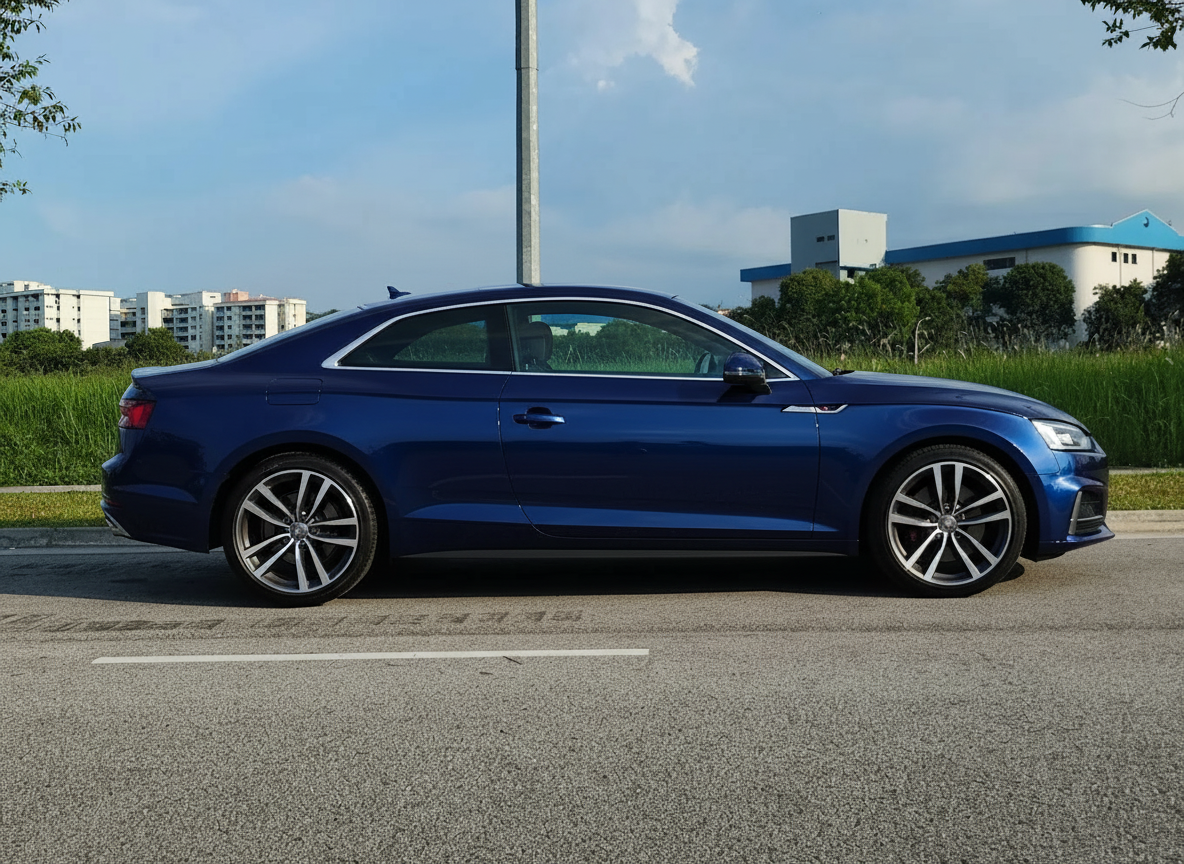
For a full colour change, I usually recommend cast vinyl rather than calendared vinyl. Cast vinyl is more expensive, but it stretches and shrinks less over time, which means fewer bubbles, less edge lifting, and a finish that stays tight through Singapore's humidity. Cheaper materials can look fine on day one, but after six months of equatorial sun, they start to fade or crack. Paying for a proven brand from the start saves money in the long run.
Finish Options Beyond Flat Paint
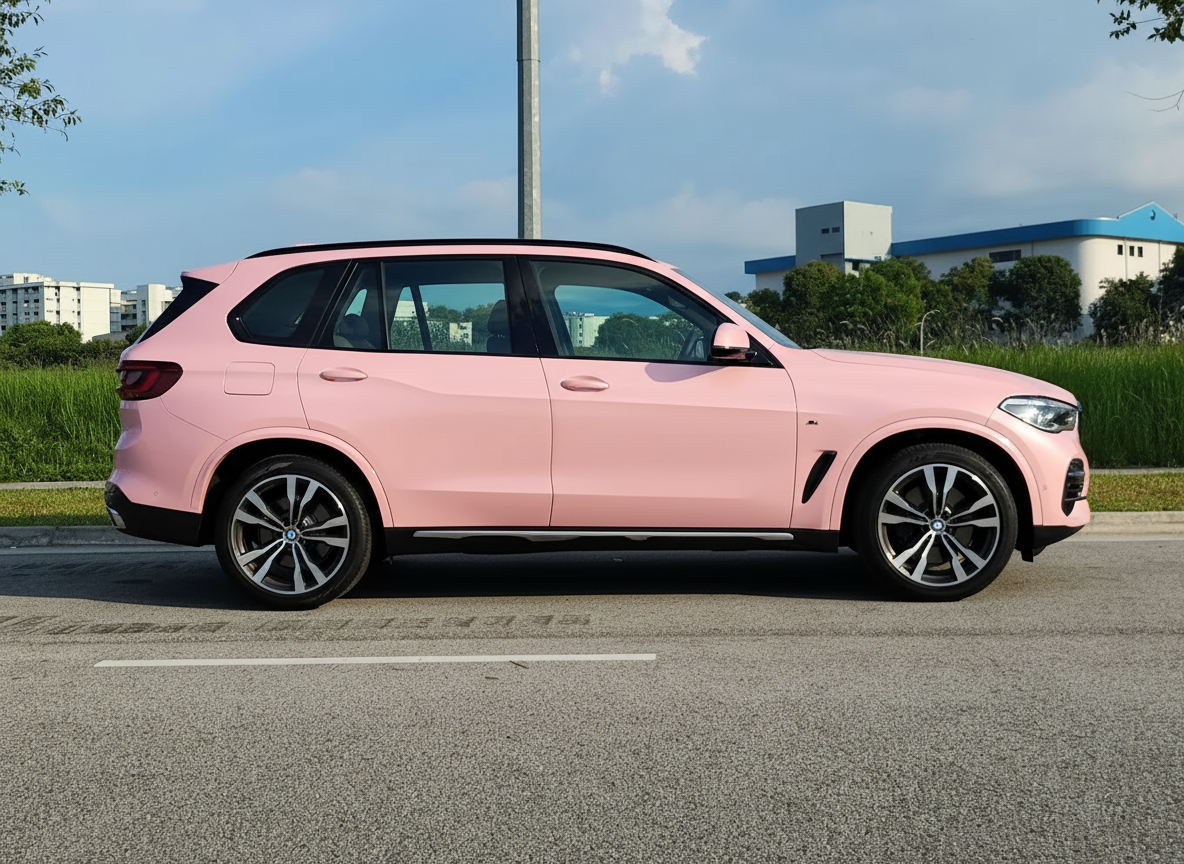
One of the best reasons to choose a wrap is the range of finishes you simply cannot get with a standard paint job. Gloss finish, matte finish, and satin finish are the basics, and they already give you more texture than most factory paints. But the real appeal comes from specialty films. Metallic wrap catches light in a way that shifts as you walk around the car. Glitter wrap adds tiny reflective flecks that sparkle under direct sun. Matte chrome looks like brushed aluminium, aggressive and modern. Brushed metal and carbon fiber wrap give a technical, motorsport feel that paint cannot replicate.
I once helped a client choose between a satin dark grey and a matte chrome silver. He went with the satin finish because he wanted something subtle for daily driving, but he added a carbon fiber wrap on the roof and mirror caps. That combination gave him a custom look without screaming for attention. That kind of mixing and matching is easy with vinyl but expensive with paint.
How Long Does It Really Take?
A full color change wrap on a standard sedan takes three to five days in a professional shop. That includes surface preparation, panel-by-panel installation, and a final quality check under bright light. Compare that to a full respray, which often takes two to three weeks because of sanding, priming, painting, and curing time. For someone who relies on their car daily, saving ten days of downtime is a real advantage. Some shops in Singapore even offer a custom wrap preview where you can see the design on a photo of your own car before any vinyl is cut. That removes the guesswork and helps you commit to a colour confidently.
The installation itself is a skilled trade, not a weekend DIY project. A professional installer uses a heat gun to stretch the film around curves and into recesses like door handles and bumper vents. They also trim edges with precision knives, tuck the vinyl around panel gaps, and post-heat every edge to activate the adhesive. Rushing or skipping these steps leads to peeling, lifting, and premature failure. A good wrap studio will give you a free quote upfront and walk you through the material options and the expected timeline.
Maintenance and Longevity in Singapore's Climate
Singapore is one of the toughest environments for any exterior finish. High UV levels, constant heat, and frequent rain mean that materials degrade faster here than in temperate climates. A quality vinyl wrap from a reputable brand, installed by someone who knows what they are doing, will last four to six years in Singapore. After that, the adhesive starts to harden and the film becomes harder to remove cleanly.
Maintenance is straightforward. Hand washing with a mild car shampoo and a soft microfiber cloth keeps the wrap clean. Avoid automated car washes with stiff brushes, because they can lift the edges. Waxing is optional; most modern wraps have a clear top coat that resists UV and minor scratches. If you park under a covered lot or in a garage, the wrap will last noticeably longer. Direct sun all day, every day, will shorten its life by a year or two. That is a trade-off worth knowing before you commit.
Cost Comparison: Wrap vs. Paint
A full color change wrap in Singapore typically costs between SGD 2,500 and SGD 5,000 for a standard sedan, depending on the material and the complexity of the car. A full respray of similar quality starts around SGD 5,000 and can go above SGD 10,000 for a multi-coat metallic or pearl finish. The wrap is also removable, so if you sell the car in three years, you can peel it off and show the original paint. With a respray, you cannot undo it, and a poor paint job actually lowers resale value.
That said, paint has its own advantages. It is more resistant to scratches and chemical stains. A wrap will not survive a key scratch or a shopping trolley bump as well as clear coat will. But for most owners, the lower cost, faster turnaround, and reversibility make the vinyl wrap the smarter choice for a temporary or semi-permanent colour change.
Is a Color Change Wrap Right for You?
If you want to refresh your car's appearance, stand out in a carpark, or protect the original paint until you sell, a color change wrap is a solid investment. It gives you access to finishes like gloss, matte, satin, metallic, glitter, and carbon fiber that you cannot get from a standard paint booth. It takes days instead of weeks, and it comes off cleanly when you are ready for something new. In a market like Singapore, where cars are both a practical tool and a personal statement, the flexibility of a wrap is hard to beat.
The decision comes down to how long you plan to keep the car and how much you value originality. If you plan to drive it for ten more years, paint might still make sense. But if you want to experiment, protect your investment, or change the look every few years, a wrap is the better path. Talk to a reputable installer, ask to see a custom wrap preview on your own car, and get a free quote before you decide. The right material, properly installed, will change how you feel about your car every time you walk up to it.